Last updated November 18, 2026




Free written scope consultation - allowances, timeline, and change-order rules on paper before a single trade is scheduled
Kitchen Remodeling Warning Signs Every Homeowner Should Know
The contractor who ghosts you on week four didn’t suddenly become unreliable. The signs were in the paperwork he handed you on week zero. Most homeowners watch behavior for red flags – the missed appointment, the messy site, the slow reply. The real signals hide in the contract, the scope document, the deposit request, and the permit folder. We’ve reviewed enough troubled kitchens across Pasadena to know the difference between a job that stalls and one that finishes clean. This guide walks you through the low-visibility signals: what a real scope of work looks like, where deposit limits sit, which permit omissions land on your liability, and how to read a license record before you sign anything.
Quick Answer
The strongest warning signs of a kitchen remodel going sideways are paperwork problems, not personality problems: a vague proposal with no line-item scope, an upfront deposit above 33%, no named permit responsibility, and no written change-order process. If any of those four are missing before work starts, expect the cost and timeline to move mid-job. A contractor who puts scope, price, and guarantee in writing – and asks for a normal deposit – is the one who finishes.
Styles & brands we work with
- Kitchen remodeling
- Bathroom remodeling
- Home additions & ADU
- Roofing
- Windows & doors
- Driveway & pavers
- Fence
Table of Contents
- 1. The Vague Proposal: What a Real Scope of Work Contains
- 2. The Deposit Red Flag: Why 30 to 33% Is the Line
- 3. Permit Omissions That Become Your Liability
- 4. Mid-Project Signs: Substitutes, Strangers, and Silent Changes
- 5. How to Read a Contractor’s License on the CSLB Database
- 6. Change Orders: The Document That Saves the Job
- 7. Pasadena-Specific Conditions That Expose Weak Contractors
- 8. What Squared Away Looks Like at Close
1. The Vague Proposal: What a Real Scope of Work Contains
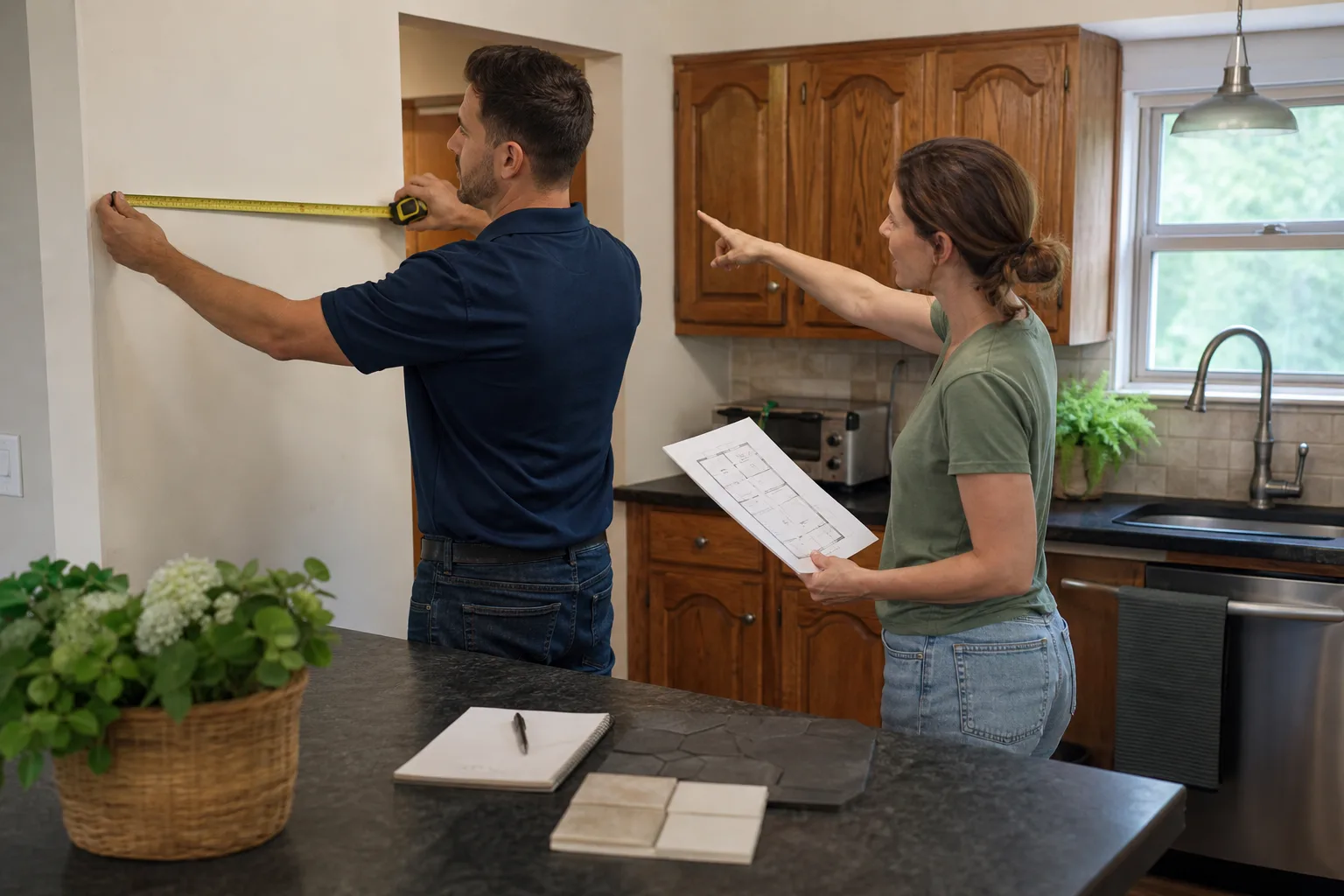
A legitimate scope of work is a document you could hand to a different contractor and get a comparable bid from. If you can’t do that, it’s not a scope – it’s a wish list with a price attached.
Here’s what a real kitchen scope names, in writing, before anyone swings a hammer:
- Cabinetry by make and model line – “KraftMaid Vantage, maple, painted finish” or “Wellborn Select, oak” – not “premium cabinets.”
- Countertop material and edge profile – Cambria or Caesarstone with the specific color and edge named.
- Fixtures by brand and SKU – Kohler or Moen, with model numbers.
- Demolition and haul-away – stated as a separate line, not folded into “labor.”
- Substrate work – the underlayment and backer board behind tile, new or repaired.
- Electrical, plumbing, and gas rough-in scope – whether the contractor handles it or a licensed trade does.
- Permit pull and inspection schedule – who files, who pays, who meets the inspector.
- Written price with no moving numbers – a total, and a stated process for changes.
When a proposal says “install cabinets and countertop, $24,000” with no breakdown, the contractor has kept the right to reinterpret every line. That’s not a negotiating style. It’s a structural weakness in the document, and it’s the single most common pattern we find in kitchens that stall across Pasadena.
Read more about how a proper Kitchen Remodeling in Pasadena scope is built, line by line.
2. The Deposit Red Flag: Why 30 to 33% Is the Line
A deposit above roughly one-third of the contract price is a structural warning, not a personality quirk. In California, the Contractors State License Board caps home improvement deposits at 10% of the contract price or $1,000, whichever is less – so any handshake request for “half down” is already outside the rule, and a request for 40 or 50% up front means your money is funding the contractor’s cash flow, not your material order.
Why the 30 to 33% ceiling matters in practice:
- Materials for a standard kitchen – cabinets, counters, fixtures – typically represent 35 to 45% of the job. A 30% deposit covers the order without overextending.
- Labor front-loading – a crew working four days a week on your kitchen shouldn’t need six weeks of labor paid in advance.
- Walk-away leverage – if the contractor has 50% of your money and disappears, you have no leverage and no kitchen.
- Change-order funding – a contractor asking for a big deposit is often the same one who asks for cash mid-job because the first draw is spent.
Ask for a draw schedule tied to milestones – demo complete, rough-in inspected, cabinets set – with the final payment held until the punch list clears. A disciplined contractor puts that schedule in the contract without being asked. If the deposit number moves at the door, that’s a negotiating tell, not a discount.
3. Permit Omissions That Become Your Liability
Permits don’t disappear when a contractor skips them. They land on the homeowner.
Most kitchen work in Pasadena triggers permits – anything touching electrical circuits, plumbing relocation, gas line changes, or structural alteration. The City of Pasadena’s building department also enforces the state’s seismic and energy code provisions, and any unpermitted work that fails at resale or at a future inspection is your problem to correct, at your cost.
The specific omissions that cost homeowners money:
- Electrical panel load – a new induction range or double oven may need a panel upgrade. If the proposal doesn’t name the panel work, the electrician will find it mid-job and bill you separately.
- Gas line capacity – moving a range from one wall to another changes the run length and requires a licensed trade, a pressure test, and an inspection.
- Ventilation to the exterior – recirculating hoods don’t pass inspection in every case; ducting through a wall or roof needs to be in the scope.
- Structural header over an opening – removing a wall in a load-bearing position requires engineering, a permit, and inspection of the header’s fastening.
- Water line and drain relocation – a sink move to the island requires new rough-in and inspection of both.
Every item above should appear in the scope, in writing, with the licensed trade named. When they’re missing, the contractor has left himself room to bill you a second time. That’s the definition of a permit omission that becomes your liability.
4. Mid-Project Signs: Substitutes, Strangers, and Silent Changes
Mid-project warning signs are quieter than you’d expect. They’re rarely dramatic – usually a different brand of cabinet appearing on the truck, or a subcontractor who doesn’t know the original scope.
Watch for these specific signals:
- Substitute materials delivered without a written change order – a Wellborn cabinet swapped for a house brand, a Cambria surface swapped for an unnamed quartz. The swap should always come with a signed change order showing the credit.
- Subcontractors arriving without the scope sheet – a tile setter who doesn’t know which edge profile you chose will install the default.
- Requests for cash mid-project – “we’re low on material funds” is a cash flow problem, not your responsibility to solve.
- Change orders presented verbally – if it’s not in writing, it’s not a change order; it’s a future dispute.
- Skipped or delayed inspections – a rough-in inspection that never gets scheduled means covered work with no paper trail.
- Site conditions that go unmentioned – wet subfloor, mold behind the old countertop, a soft joist. Silence about a surprise is the sign of a contractor who plans to bill later.
We’ve seen a kitchen in Pasadena’s Bungalow Heaven neighborhood lose three weeks because the cabinet delivery arrived in the wrong finish and no change order had been signed. The contractor had no paper trail to defend himself against the supplier. The homeowner had no leverage to demand a swap. Written change orders protect both sides.
5. How to Read a Contractor’s License on the CSLB Database
Before you sign, spend ten minutes on the Contractors State License Board (CSLB) website, at cslb.ca.gov. Every licensed contractor has a record you can read in full.
Here’s what to check, in order:
- License status – “Active” and “Clear” are the two words you want. “Active” means the license hasn’t been suspended. “Clear” means there are no outstanding complaints, citations, or disciplinary actions against it. A record that says “Active” but not “Clear” needs a closer look.
- Classification – B (General Building), C-39 (Roofing), C-36 (Plumbing). A general B license covers a kitchen remodel. A specialty license alone does not.
- Expiration date – licenses lapse. Check the date is months away, not weeks.
- Bond and workers’ comp – the bond amount should be listed, and workers’ comp should be current. Both are homeowner protections.
- Complaint history – the record lists complaints and whether they were resolved. A single old complaint isn’t a deal-breaker; an unresolved pattern is.
If the contractor gives you a license number that doesn’t come back, or shows up under a different business name, walk. That’s the single most reliable sign you’re looking at someone who shouldn’t be in your kitchen.
6. Change Orders: The Document That Saves the Job
A change order is a one-page document that names what’s changing, the new price, and the new completion date. It’s signed by both parties before the change gets built. That’s it. It’s also the single document that saves projects.
Here’s how a proper change order works, step by step:
- The change is raised in writing – by you or by the contractor, on paper.
- The cost impact is stated – materials, labor, and any subcontractor fee, in dollars.
- The schedule impact is stated – how many days the change adds.
- Both parties sign and date – the original stays with the contractor, a copy goes to the homeowner.
- No work proceeds on the change until the paper is signed – no exceptions, no “we’ll sort it later.”
A contractor who insists on written change orders is protecting you. A contractor who resists them, or who treats them as a formality to be sorted out at the end, has built a project where every undocumented upgrade becomes a dispute. Our General Contractor in Pasadena service runs on written scope, written price, and written guarantee – no verbal changes, ever.
7. Pasadena-Specific Conditions That Expose Weak Contractors
Pasadena’s building stock creates conditions that weak contractors won’t plan for. The city’s mix of 1920s Craftsmans in Bungalow Heaven, mid-century homes in Caltech-adjacent neighborhoods, and newer builds in the hills each bring their own surprises.
Here’s what a disciplined contractor will have already accounted for in Pasadena:
- Seismic retrofit interaction – opening a wall in an older Pasadena home often reveals that a shear wall or cripple-wall bracing is missing. The good contractor flags it before demo, in writing.
- Hot, dry summers and interior humidity – Pasadena’s dry climate means wood cabinets need to acclimate before installation. Skipping the acclimation step produces gapped doors by the following summer. A real proposal names the acclimation period.
- Clay soils and slab movement – kitchens with a slab floor sometimes show hairline cracking from older soil movement. A surface patch won’t hold; the substrate needs to be addressed.
- Older gal plumbing – many Pasadena homes still carry older galvanized supply lines. A reputable contractor tests pressure before the new fixtures go in, and puts the test in the scope.
- Overlay districts and historic review – some Pasadena blocks fall under overlay districts that require design review for exterior changes. If your kitchen opens to the exterior, that review has a schedule and a permit.
These aren’t hypotheticals. They’re the conditions we plan for on every Pasadena kitchen, because ignoring them means coming back later to fix what should have been scoped at the start.
If the remodel also touches a bath, our Bathroom Remodeling in Pasadena team follows the same written-scope discipline.
8. What Squared Away Looks Like at Close
The sign of a well-run job isn’t just a finished kitchen. It’s what’s in your hand at the end.
- A clean site – no material piles, no debris, no leftover boxes in the garage.
- Documented scope – the original scope plus every signed change order, in a folder.
- Passed inspections – the permit card shows the final inspection cleared.
- A signed written guarantee – not a verbal promise, a document.
- Warranty paperwork for the brands installed – cabinet, countertop, fixture, and appliance warranties handed over in one bundle.
The Bradford Remodeling Co Pasadena home standard is that close: clean site, documented scope, signed written guarantee in the homeowner’s hand. That’s what The Garrison Standard looks like at job close, and it’s what you should ask every contractor to demonstrate before you hire them.
Common Mistakes to Avoid
- Hiring on price alone – the lowest bid usually has the loosest scope. The number that wins the bid is the number that grows the invoice.
- Skipping the CSLB check – ten minutes on cslb.ca.gov prevents the single worst outcome: hiring an unlicensed operator who can’t be held to a bond.
- Paying more than a normal deposit – if you’re paying over 33% up front on a Pasadena kitchen, you’ve handed the contractor your leverage.
- Accepting a verbal change order – “we’ll just swap the counter and settle up” always ends badly. Get it in writing, always.
- Ignoring permit responsibility in the contract – if the scope doesn’t say who pulls the permit, the permit falls to the homeowner. Pasadena requires it, and inspectors will find the omission.
- Letting a subcontractor arrive without the scope sheet – the tile setter, the electrician, and the plumber all need to read the same document you signed.
- Skipping the final walk – the punch list is where quality issues surface. A contractor who resists a formal walk is telling you something about the finish.
See the difference
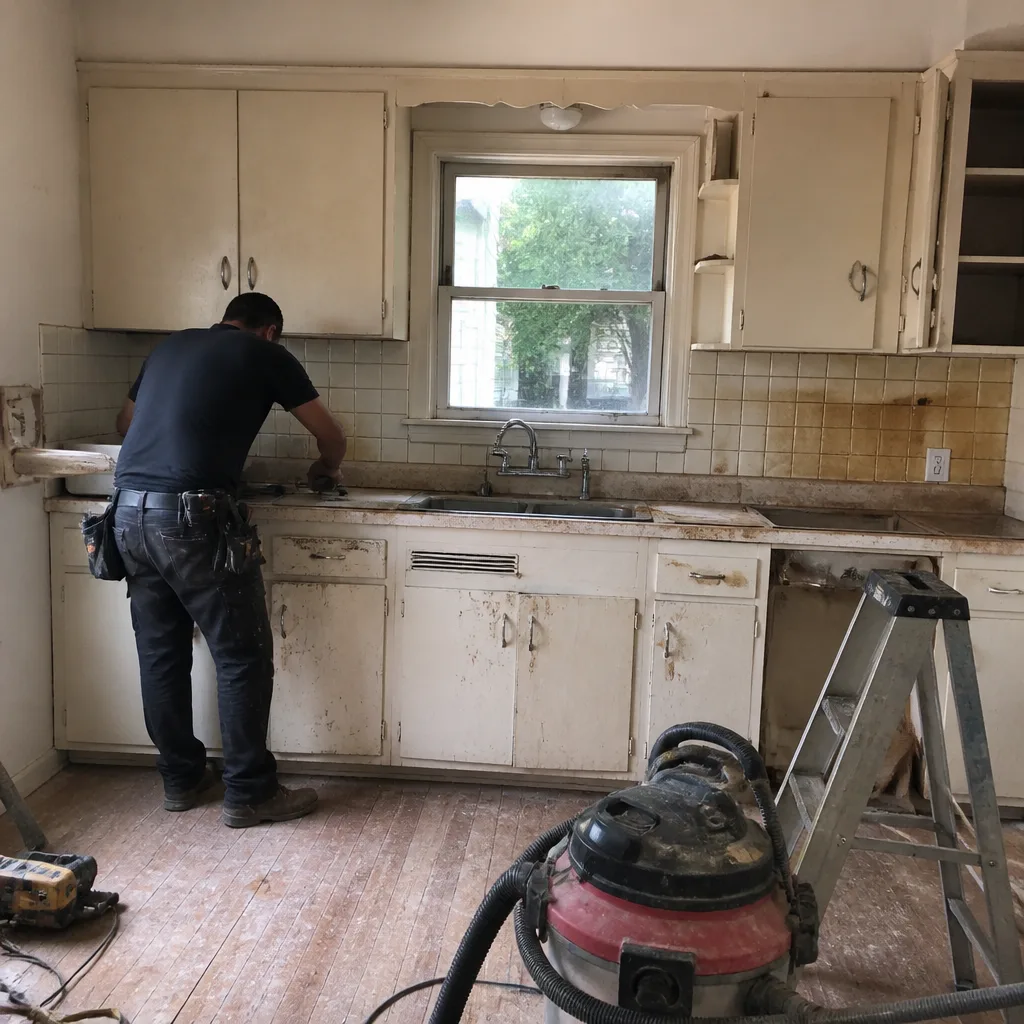 Before
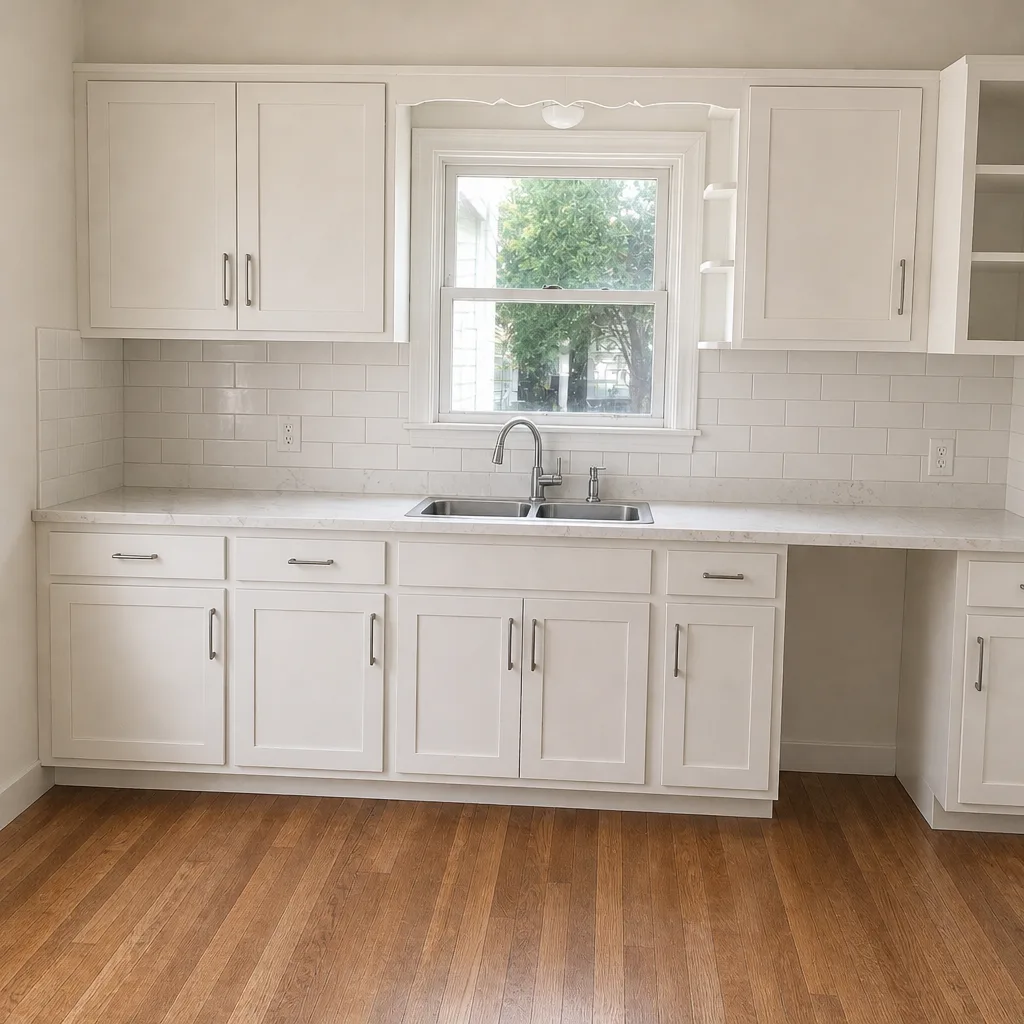 After
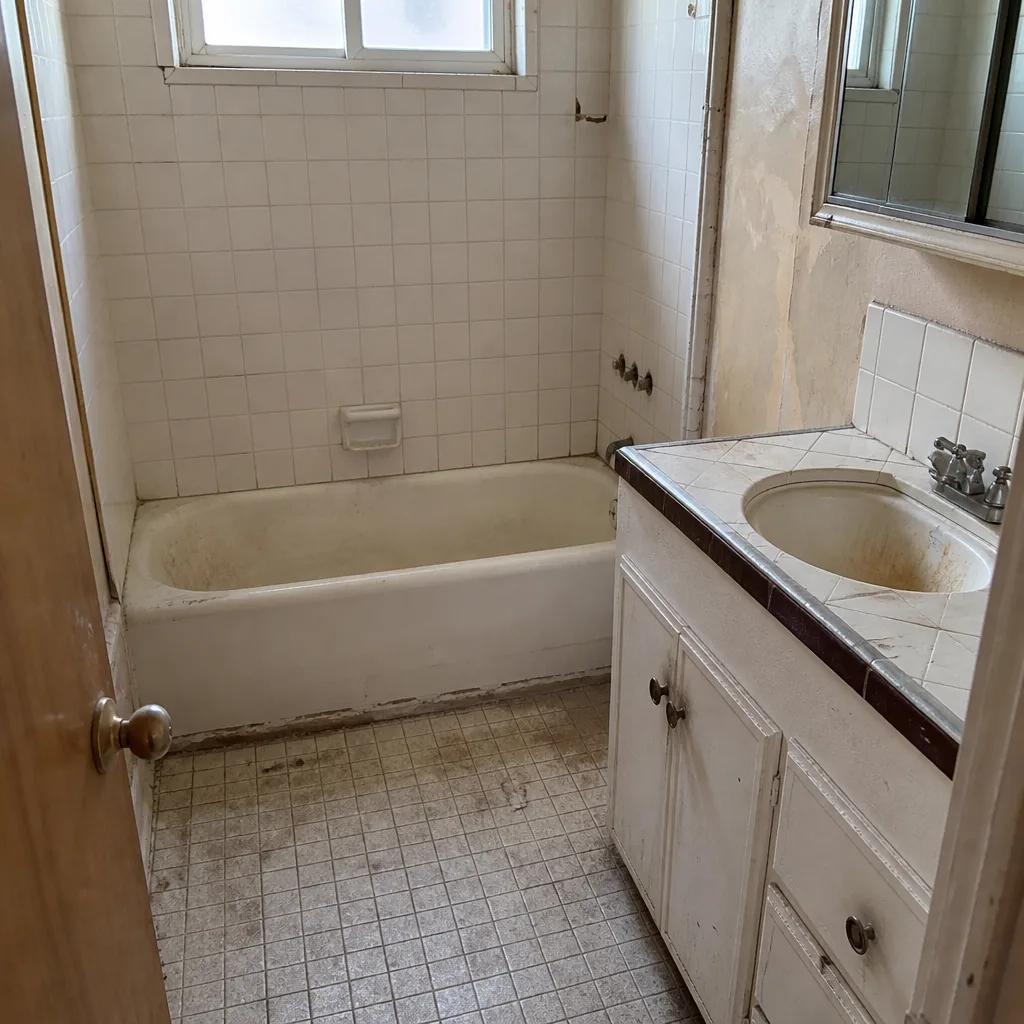 Before
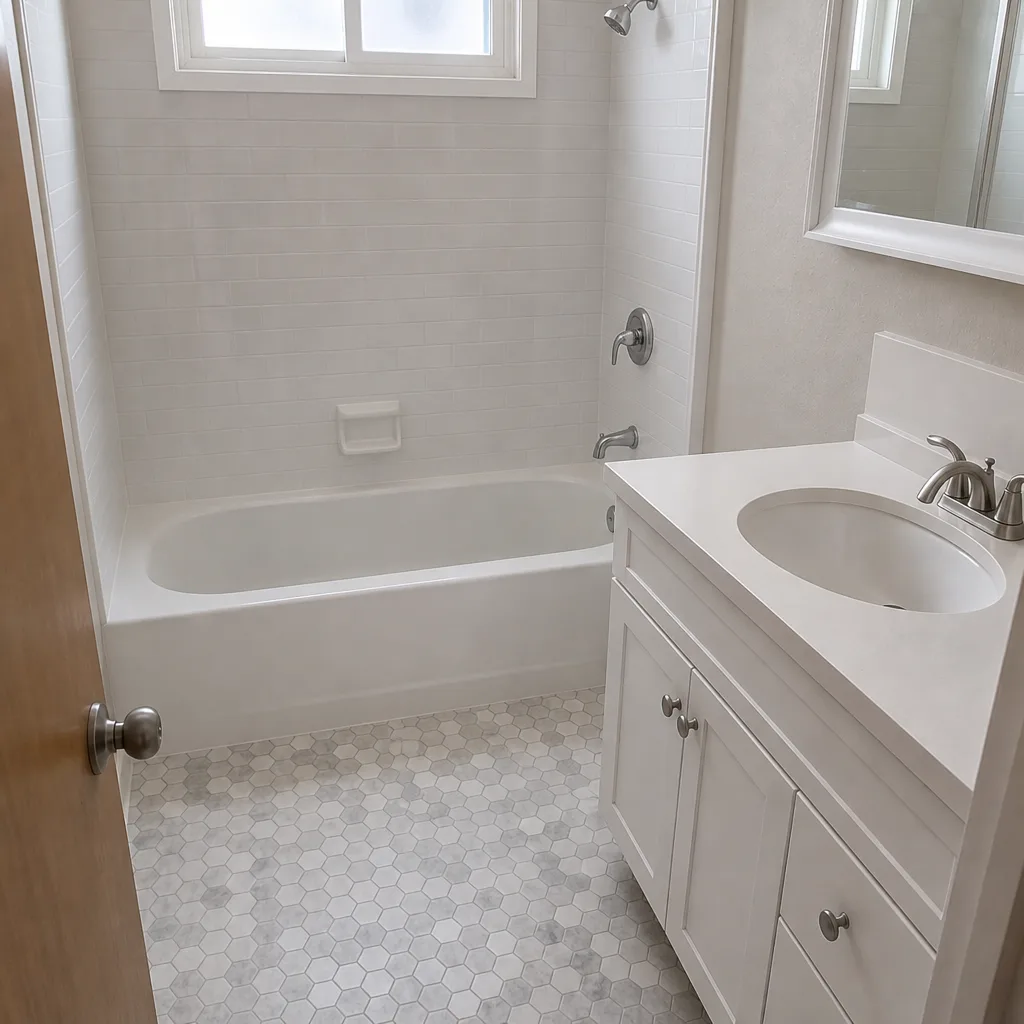 After
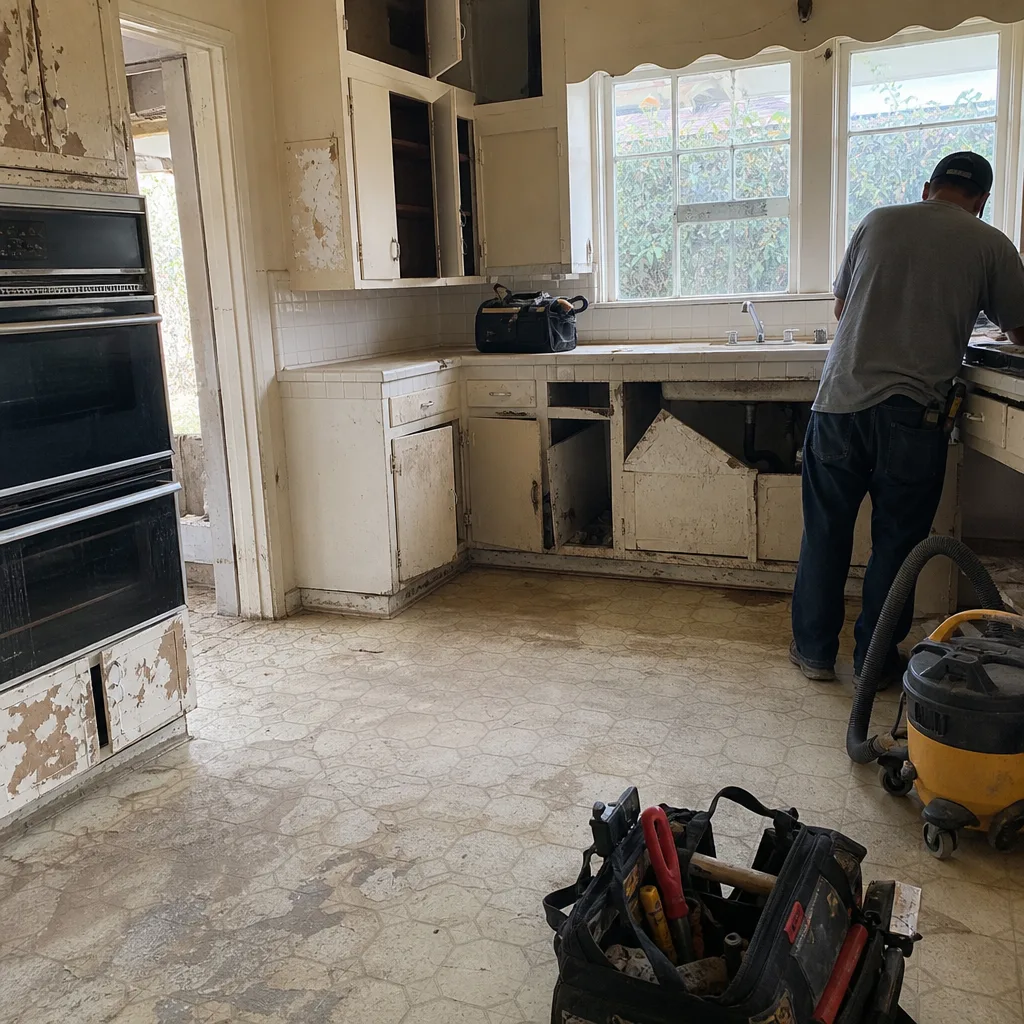 Before
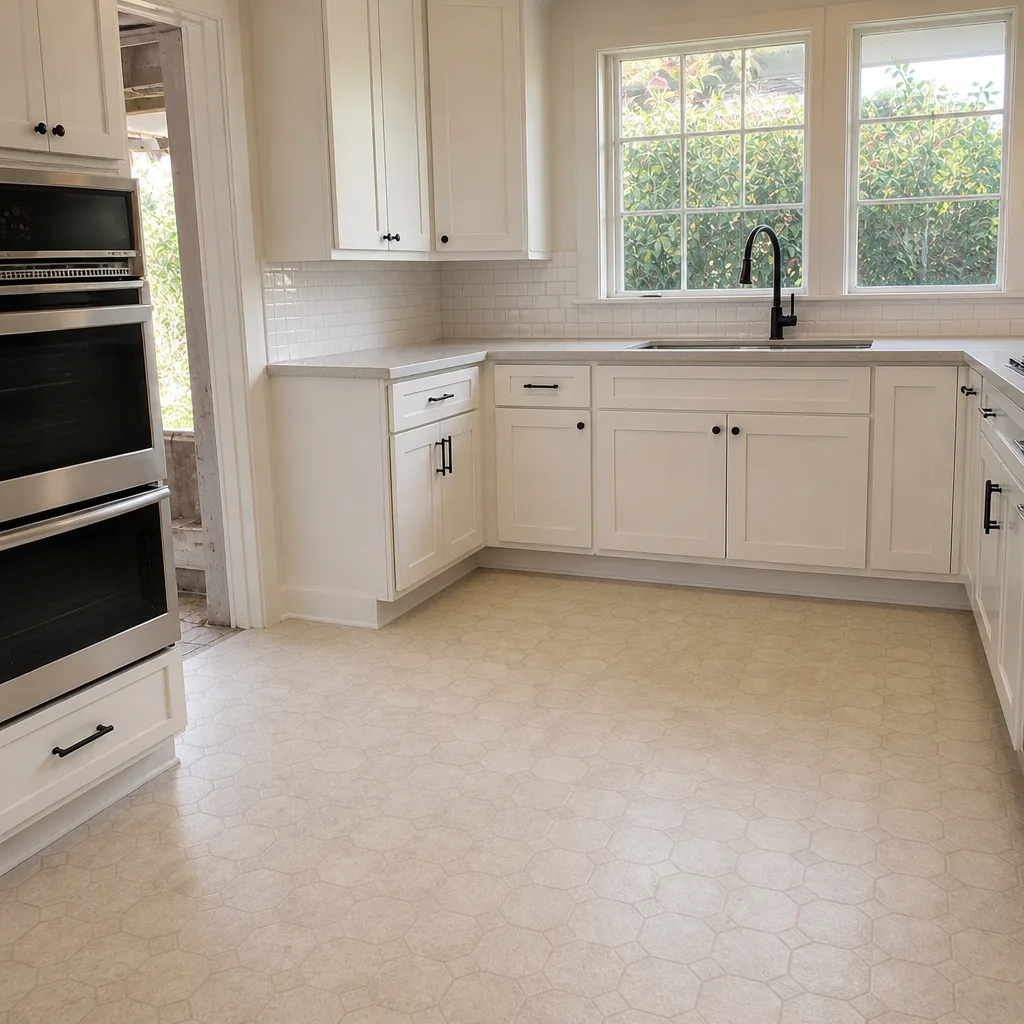 After
When to Call a Professional
Some kitchen problems are warning signs. Some are already failures. Call a professional contractor when a job is mid-discovery (a wall opened, a slab cracked, a surprise behind the cabinets), when a previous contractor has left work stalled with no written scope to restart from, when a permit needs to be pulled fresh because the original was never filed, or when a kitchen has been sitting unusable for weeks with no path to finish. Structural openings, gas line work, and electrical panel changes aren’t homeowner tasks – they’re licensed trade work with inspection requirements behind them.
Bradford Remodeling Co Pasadena offers free estimates in Pasadena – call (888) 841-5410 to book one. Every price is written before work starts, and every completed project carries the 365-Day Done Right Promise: if the work fails within a year, we return and correct it at no charge.
Frequently Asked Questions

The biggest warning sign is a proposal with no line-item scope – a single lump-sum price with no named brands, no substrate notes, and no permit responsibility. Without that breakdown, the contractor retains the right to reinterpret every line mid-job. Ask for a written scope that names the cabinet line, the countertop material, the fixtures, the substrate work, and who pulls the permit. If the answer is “we’ll figure that out as we go,” you’ve found your warning sign.
A normal deposit is 30 to 33% of the contract price, paid against a milestone schedule. California law caps home improvement deposits at 10% or $1,000, whichever is less, and a disciplined contractor structures the rest as draw payments tied to demo, rough-in, cabinet set, and punch list clearance. If a contractor asks for 40% or more up front, treat that as a structural red flag – not a negotiating position. Call (888) 841-5410 for a written estimate with a clear deposit and draw schedule.
Yes, if your kitchen work touches electrical circuits, plumbing, gas lines, structural elements, or ventilation to the exterior. Pasadena’s building department requires permits for these changes, and the work must pass inspection before the job is closed. Unpermitted work becomes the homeowner’s liability at resale or at any future inspection. The scope should state who pulls the permit and who meets the inspector – in writing.
Go to cslb.ca.gov and enter the license number the contractor provides. Check that the status shows “Active” and “Clear,” that the classification (B, C-39, C-36) matches the work, that the expiration date is months away, and that the bond and workers’ comp are current. Also read the complaint history – a resolved old complaint is common; an unresolved pattern is a warning. If the license number doesn’t come back, walk away.
A written change order needs four things: the specific change, the cost impact in dollars, the schedule impact in days, and signatures from both parties. No work proceeds on the change until the document is signed. A contractor who treats change orders as a formality, or who makes verbal swaps, is signaling that every future upgrade will be a dispute. Written change orders protect the homeowner and the contractor equally.
The 365-Day Done Right Promise is a written guarantee on every completed Bradford Remodeling Co Pasadena project. If the work fails within one year of completion – a cabinet door that won’t close, a countertop seam that opens, a tile edge that lifts – we return and correct it at no charge. The guarantee is a written document handed over at close, not a verbal promise. Call (888) 841-5410 to schedule a free estimate and see exactly what the guarantee covers.
The Bottom Line
The signs of a kitchen remodel going sideways are almost always in the paperwork, not the personality. A vague proposal, a deposit above one-third, a permit omission, a verbal change order, and a license record you never checked – those are the five signals that separate a contractor who finishes from one who strands the job. Read the scope, check the CSLB, cap the deposit, insist on written change orders, and hold final payment until the punch list clears. The kitchen that gets squared away is the one that started with a written price, a documented scope, and a signed guarantee.
Call (888) 841-5410 for a free estimate from Bradford Remodeling Co Pasadena. A live person answers, 24 hours a day. We bring a written price before any work starts, a documented brand roster (KraftMaid, Wellborn, Cambria, Caesarstone, Kohler, Moen, and more), and the 365-Day Done Right Promise on every completed job.
Written by the team at Bradford Remodeling Co Pasadena.