Last updated November 18, 2026
Free written scope consultation - allowances, timeline, and change-order rules on paper before a single trade is scheduled
How Long Does Kitchen Remodeling Take? Timelines and What to Expect
Most kitchen remodels in Pasadena run 6 to 12 weeks, but roughly 40% of that window is dead time between phases – not labor. Knowing which gaps are normal and which ones mean your contractor is juggling three other jobs is the difference between a finished kitchen and a half-gutted one. In this guide, we break down exactly where the days go: permit pull, demo, rough-in, inspection, cabinets, countertops, finish work. You’ll learn realistic day counts for each phase, why stone countertop fabrication is the single most common schedule killer, and how to verify your contractor in Pasadena actually submitted your permits instead of hiding behind “waiting on the city.”
Quick Answer
A typical kitchen remodel takes 6 to 12 weeks from signed contract to final walkthrough, with the average project landing around 8 weeks. The biggest variable is not how fast the crew works – it’s how early permits are pulled and whether cabinets and stone are ordered before demo starts. In Pasadena, add roughly one to three additional weeks for permit review through the Building and Safety Division if your plans require a structural change or electrical panel upgrade.
Styles & brands we work with
- Kitchen remodeling
- Bathroom remodeling
- Home additions & ADU
- Roofing
- Windows & doors
- Driveway & pavers
- Fence
Table of Contents
- Where the Days Actually Go: Phase-by-Phase Breakdown
- The Permit Timeline in Pasadena: What to Expect and How to Verify
- Material Lead Times: Why Cabinets and Stone Set the Schedule
- Countertop Fabrication: The Single Most Common Schedule Killer
- Inspection Holds vs. Contractor Excuses: How to Tell the Difference
- What a Written Project Schedule Should Look Like Before Work Starts
- Renovation vs. Full Replacement: Different Timelines, Different Risks
Where the Days Actually Go: Phase-by-Phase Breakdown
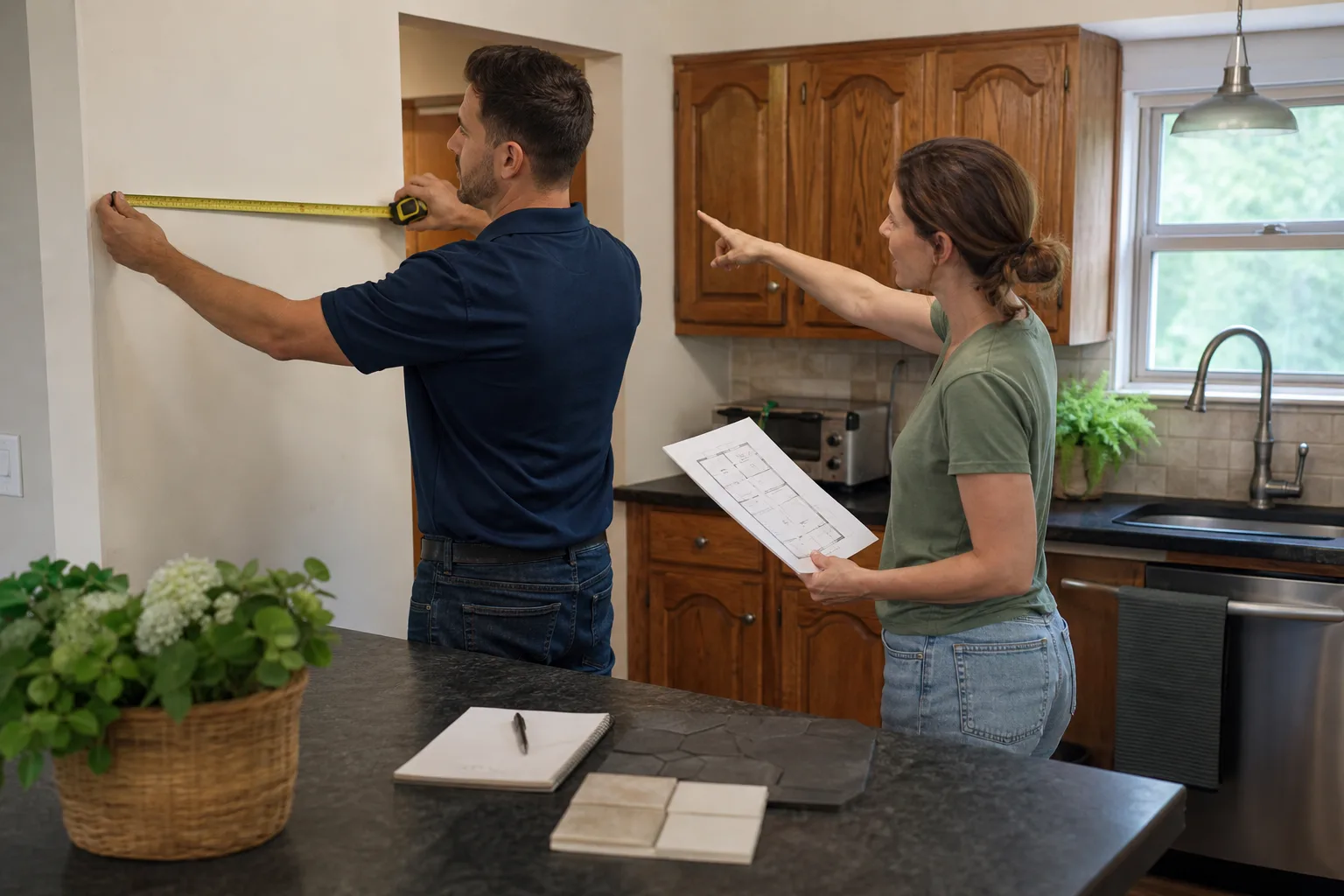
A kitchen remodel is a sequence of seven overlapping phases. When homeowners complain that a project “dragged,” it’s almost always because two or three of these phases were sequenced wrong – not because the trades moved slowly. Here’s the realistic breakdown for a mid-size Pasadena kitchen, roughly 150 to 250 square feet.
- Permit pull and design finalization: 5 to 25 calendar days. Drawings, plan check, and issuance. Over-the-counter permits move fastest; structural or panel-upgrade plans take longer.
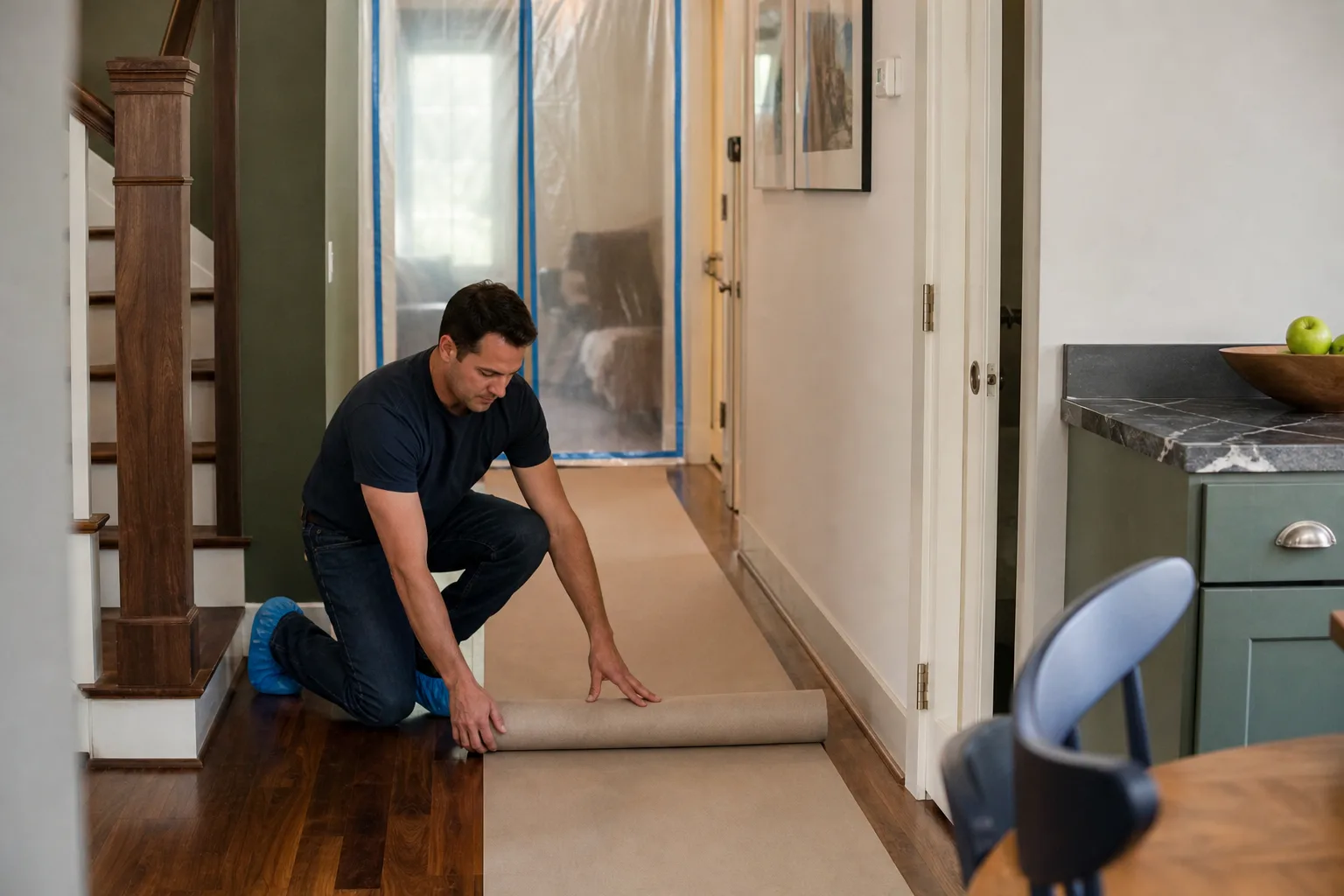
- Demo and site protection: 1 to 3 days. Gutting cabinets, counters, flooring, and drywall. A disciplined crew tents the work zone with plastic and floor protection before the first hammer swings.
- Rough-in (plumbing, electrical, HVAC): 3 to 6 days. Moving supply lines, adding circuits, relocating the range hood exhaust. “Rough-in” means the work that goes inside the walls before they’re closed up.
- Rough inspection: 1 to 5 days, sometimes longer. The city inspector signs off on framing, electrical, and plumbing before drywall closes the walls.
- Insulation, drywall, tape, texture, paint: 5 to 10 days. Prime coat, finish coat, then primer and paint go on the new walls.
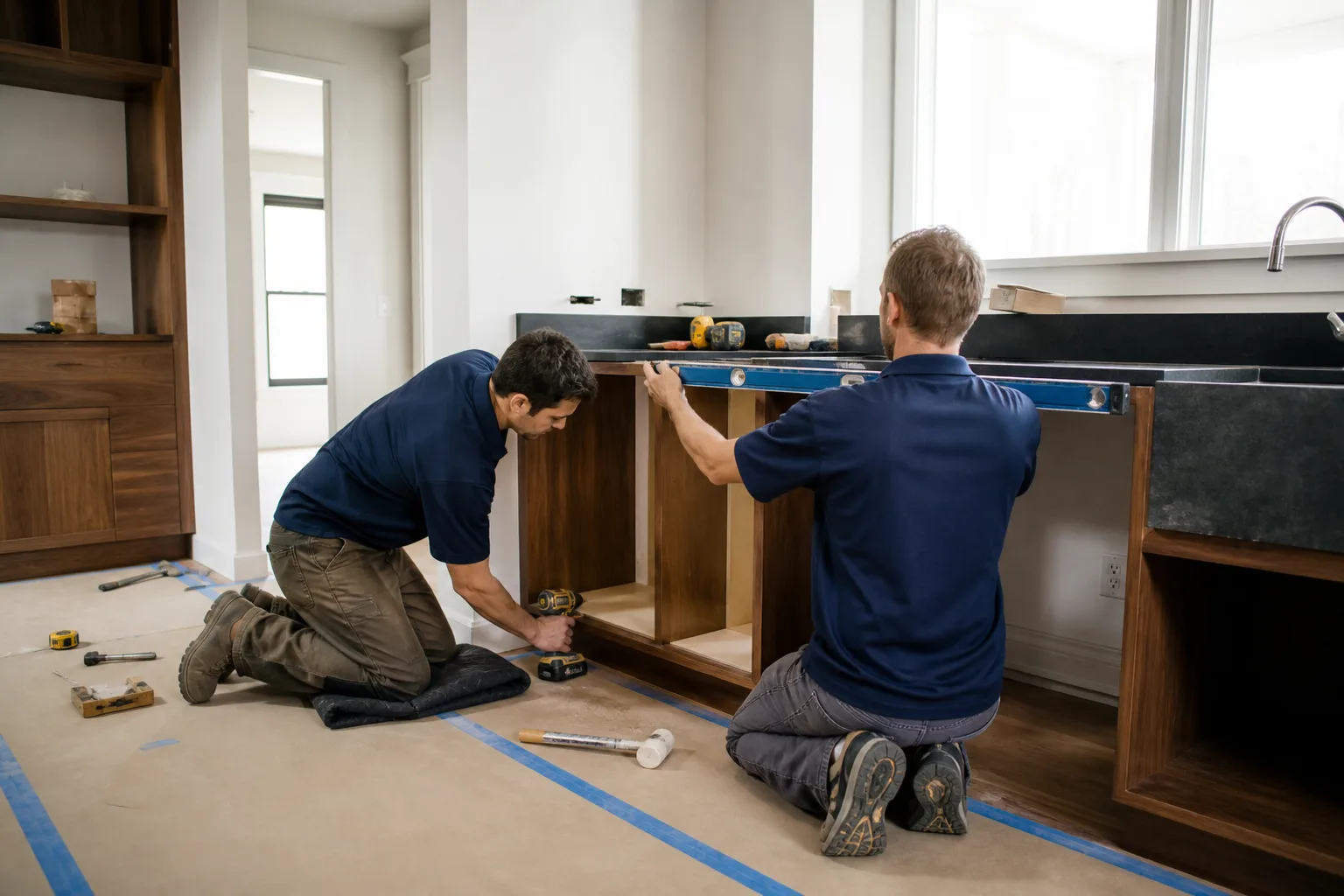
- Cabinet install and countertop template: 3 to 5 days for cabinets, plus 7 to 14 days waiting on stone. This is where the schedule usually slips – see the countertop section below.
- Countertop install, tile, fixtures, and finish work: 5 to 10 days. Setting the stone, backsplash tile, sink, faucet, appliances, cabinet hardware, and final paint touch-ups.
Stack those up and you get 30 to 68 working days. Converted to calendar weeks with weekends and normal gaps, that’s the 6 to 12-week range. In Pasadena, kitchens in older homes – especially those built before 1960 in neighborhoods like Bungalow Heaven or Caltech – often need electrical panel upgrades, and that adds a separate permit and roughly one to two weeks. If your general contractor isn’t sequencing the panel upgrade in parallel with demo, that’s a scheduling miss you’re paying for in weeks.
The Permit Timeline in Pasadena: What to Expect and How to Verify
In Pasadena, kitchen permits go through the city’s Building and Safety Division. For a simple like-for-like swap of cabinets and counters with no layout change, many homeowners qualify for a fast over-the-counter permit that can be issued the same week. Once you move plumbing, add circuits, or open a load-bearing wall, plan check is required – and that review typically runs one to three weeks. Structural changes or a historic-district property can push it longer.
Here’s the part contractors don’t always tell you: you can verify permit status yourself, and you should.
- Ask for the permit application number the day it’s submitted. Not “we filed it” – the actual number. If your contractor can’t produce it within 48 hours of a signed contract, the permit wasn’t pulled.
- Check the city’s online permit portal. Pasadena publishes permit status online. Search by address and confirm the application matches your scope.
- Look at the inspection log. Every inspection has a date and a result. A real inspection hold shows a scheduled date and an open status. A stall shows nothing.
- Confirm the permit is posted on-site before demo. Pasadena requires the permit card visibly posted during construction. If your kitchen is gutted and there’s no permit on the wall, that’s a flag.
Why does this matter for timelines? Because “waiting on the city” is the most common excuse a contractor uses to cover for double-booking. We’ve seen homeowners on the hook for six-week gaps that had nothing to do with Pasadena’s Building and Safety Division. The city does have real backlogs – plan check takes the time it takes – but you can check. A written project schedule that names a permit submittal date and a permit-issuance milestone, not a vague range, is the difference between knowing where you stand and guessing.
Material Lead Times: Why Cabinets and Stone Set the Schedule
Here’s the counterintuitive truth about kitchen timelines: the single biggest variable is not labor – it’s when the materials land on your driveway. A disciplined schedule sequences material orders to arrive before the phase that needs them, not after. Here are realistic lead times we plan around on Pasadena projects.
- Semi-custom cabinets: 4 to 8 weeks from order to delivery. KraftMaid and Wellborn both publish typical lead times; the number moves with door style, finish, and cabinet count. Order these the day your layout is finalized – not after demo.
- Custom cabinets: 8 to 12 weeks. If you’re choosing custom, the schedule either stretches or you change the plan.
- Quartz and stone countertops: fabricated 7 to 14 days after template. The template happens after cabinets are installed. So you can’t order the stone on day one – you order the slab (if you’re reserving a specific slab) but the fabrication starts after template.
- Tile and flooring: 1 to 3 weeks. Stock tile ships fast; special-order tile is slower. Order backsplash tile at the kitchen design meeting, not the week the drywall goes up.
- Appliances: 1 to 6 weeks. Freestanding ranges and standard dishwashers turn around quickly. Panel-ready refrigerators, professional ranges, and specialty hoods can run much longer; confirm ship date before the layout is locked.
- Sinks and faucets: 3 to 10 days. Kohler and Moen products are usually in stock, but check the specific model.
A general contractor who orders cabinets on the day demo starts has already added three to six weeks to your project. The disciplined sequence is: finalize layout, order cabinets, pull permits, order appliances and tile, template stone after cabinet install, fabricate, set stone. Any contractor who won’t put cabinet order date and cabinet delivery date on the schedule is leaving your project open to a stall.
Countertop Fabrication: The Single Most Common Schedule Killer
If you ask ten kitchen remodelers what phase causes the most delay, nine will tell you the same thing: the gap between cabinet install and countertop install. The reason is structural – the sequence is built in, not avoidable. You cannot template a countertop until the base cabinets are set, leveled, and shimmed. You cannot fabricate the slab until it’s templated. You can’t install the countertop until the fabrication is done. That’s a 7 to 14-day gap between two visible phases, and during that gap the kitchen looks done but isn’t.
The mistake most homeowners and underprepared contractors make is leaving that gap unplanned. Here’s how a disciplined schedule handles it.
- Reserve the slab early. If you’re using a specific Cambria or Caesarstone slab, reserve it at the time you finalize cabinet layout. Some stone yards will hold a reserved slab for weeks. Waiting to “pick the stone later” often means picking a different stone, because the one you loved was sold.
- Schedule the template the same week cabinets are installed. Not the following week. The two dates should be on the written schedule together.
- Plan finish work to happen during the stone gap. Electrical trim-out, cabinet hardware, plumbing trim prep on the sink rough-in, backsplash tile layout planning. A good foreman fills the gap with productive work.
- Have the sink and faucet on site before template. Undermount sinks template with the countertop; delivery delays on a Kohler sink after template is scheduled has cost projects a full week.
- Expect the setback on slab fabrication, not just install. Fabrication shops are booked. Booking the fabrication slot the day cabinets are installed, not the day template is done, is what keeps the schedule honest.
If your contractor can’t tell you the template date and the fabrication window in the same sentence on the schedule, that’s where the delay will live. In Pasadena we plan around this gap – it’s not a surprise. It’s a phase.
Inspection Holds vs. Contractor Excuses: How to Tell the Difference
Not every delay is a contractor failure. Some delays are legitimate inspection holds, and the difference matters when you’re evaluating your general contractor mid-project. Here’s how to tell them apart in about two minutes.
- A real inspection hold has a scheduled date. The inspector’s calendar is public or visible in the portal. A specific date is a real hold.
- A real inspection hold has a documented reason. “Framing correction required” or “electrical ground detail” – specifics on the correction notice. A vague “the city is behind” with no correction ticket is a stall.
- A real inspection hold creates a paper trail. Correction notices are public record; you can ask to see the notice. A contractor who won’t produce the document has something else going on.
- A real inspection hold has an expected re-inspection date. Once corrections are made, a re-inspection is scheduled. No date on the calendar means no submission was made.
- A stall looks like silence. No correction notice, no scheduled date, no portal activity for weeks. That’s not the city – that’s your contractor.
In our experience across Pasadena, the real inspection holds we see run a few days to two weeks, usually on rough-in or panel upgrades in homes where the original wiring was mid-century knob-and-tube. The fake ones drag on much longer because the crew is on a different job. If the answers don’t line up with the paperwork, ask for the paperwork. A contractor operating under a disciplined standard will hand it over without hesitation – that’s part of what a written standard actually looks like.
What a Written Project Schedule Should Look Like Before Work Starts
Before a single tool comes out, you should have a written project schedule in your hand – not a range, not a verbal estimate, an actual schedule with named milestones. Here’s what it should contain, minimum.
- Start date, end date, and working days count. Not “6 to 8 weeks.” A calendar start and calendar end with the count of working days stated.
- Permit submittal date and expected issuance date. Both dates named. This is the phase most likely to slip, and it’s the one you can independently check.
- Cabinet order date and cabinet delivery date. Both. If the contractor hasn’t ordered cabinets yet, the schedule is fiction.
- Demo date and rough-in start date. Rough-in should start within one to three working days of demo ending – not “when the crew is available.”
- Rough inspection scheduled date. On the calendar.
- Drywall close date, cabinet install date, countertop template date, countertop install date. Four separate milestones. If a contractor won’t commit to a template date, ask why.
- Substantial completion and final walkthrough dates. Substantial completion means the kitchen is functionally usable. Final punch list completes the punch items after substantial completion.
- Written scope protection. If the scope changes, the schedule changes with a written change order. No handshake amendments.
A written schedule is a contract of expectations. It’s the same discipline we apply to pricing – a written number before work starts, no numbers that move at the door. If your contractor can’t produce a written schedule with those milestones, they either don’t plan, or they don’t want you to know the plan. A full schedule is what a real general contractor delivers alongside the written price.
Renovation vs. Full Replacement: Different Timelines, Different Risks
Not every kitchen remodel is the same project. A cosmetic refresh and a full gut-and-replace run on completely different clocks. Here’s how the timelines break down.
Cosmetic refresh (paint, hardware, updated appliances, refaced cabinet fronts): two to three weeks. Usually one permit or none. Fast, low risk, and often the right move if the cabinet boxes and layout are sound. Notably, some cabinet lines (including selected KraftMaid and Wellborn options) offer door and drawer front replacements that refresh a kitchen without the 4 to 8-week cabinet lead time.
Mid-range remodel (new cabinets, counters, flooring, lighting, backsplash – same layout): six to nine weeks. Typically an over-the-counter permit or a small plan check. This is the most common kitchen project in Pasadena, and it’s the one most schedule advice is written around. Cabinet lead time and countertop fabrication dominate the calendar.
Full gut and layout change (moving walls, plumbing relocation, panel upgrade, vented hood install): ten to fourteen weeks and up. Plan check required, structural scope if a wall opens, and mechanical inspection of the hood vent. Pasadena homes with original 1920s to 1950s wiring often need a panel upgrade, which is a separate permit and a separate inspection, adding one to two weeks. Add a full-width backsplash and specialty tile, and the tail end stretches further.
The right way to think about the timeline: the cosmetic refresh is dominated by labor availability; the full gut is dominated by sequencing. When you know which lane your project is in, you know where to focus the questions. For homeowners weighing a larger remodel, our kitchen remodeling in Pasadena page walks through what a documented kitchen scope looks like. Similar sequencing logic applies to bathrooms, and our bathroom remodeling in Pasadena page covers how the smaller footprint changes the clock.
Common Mistakes to Avoid
- Ordering cabinets after demo. This is the most expensive scheduling mistake in kitchen remodeling. Orders placed on demo day add four to eight weeks to your project – order on layout finalization, not after gutting.
- Assuming your contractor pulled the permit because they said they did. Ask for the permit number within 48 hours of contract signing. In Pasadena, you can verify the application online through the Building and Safety Division. “We filed it” without a number is not filing.
- Picking countertops after cabinets are installed. Slab selection and reservation should happen during cabinet ordering. If you wait until cabinets are set, you’ll be selecting from what’s still available, and the fabrication window will still add a week. A reserved Cambria or Caesarstone slab solves this.
- Signing a schedule that says “6 to 8 weeks” with no milestones. Range schedules are where accountability goes to die. Get the specific milestones in writing: permit date, cabinet order date, cabinet delivery date, cabinet install date, countertop template date, countertop install date.
- Buying the refrigerator on week one without confirming the panel-ready ship date. Specialty appliances – panel-ready refrigerators, pro ranges, custom hoods – ship in weeks, not days. If the appliance won’t land before the countertop install, the kitchen isn’t usable even when the work is done.
- Letting the kitchen sit in the “waiting on the city” stall without paperwork. If your contractor is telling you the city is holding up inspection but can’t produce a correction notice or a scheduled re-inspection, the delay isn’t the city. Ask for the log.
- Not planning the finish-work window during the countertop gap. The seven to fourteen days between cabinet install and countertop install isn’t dead time – a disciplined foreman fills it with electrical trim, tile layout, and finish prep. If your schedule shows a gap there with nothing planned, ask what’s happening in that window.
See the difference
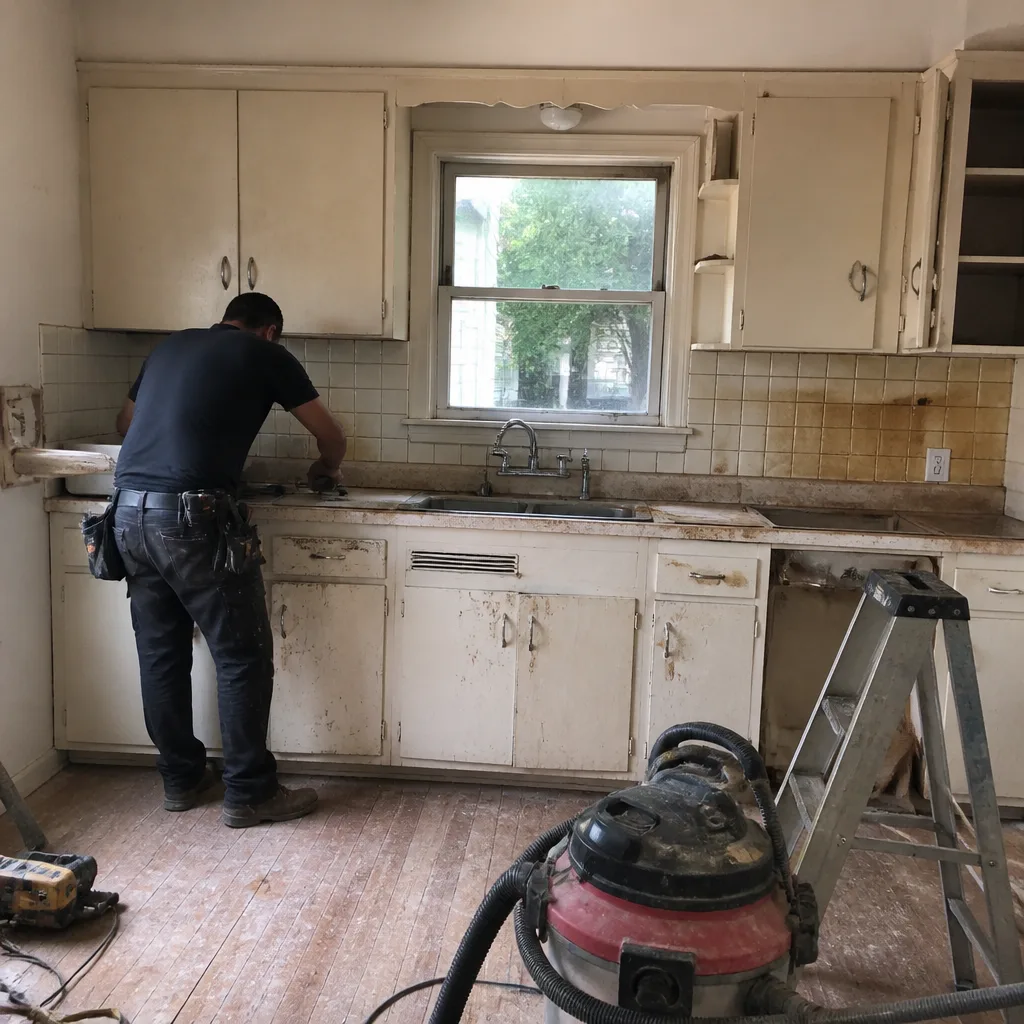 Before
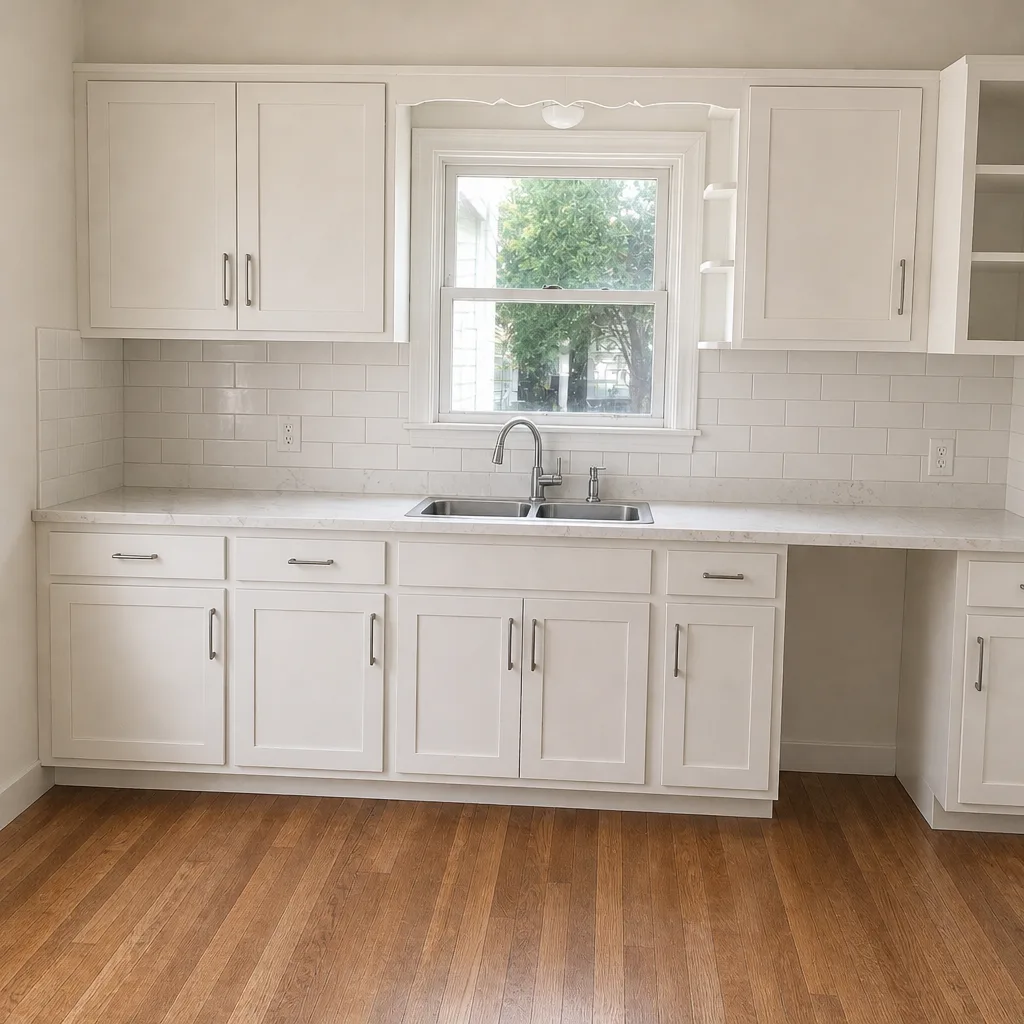 After
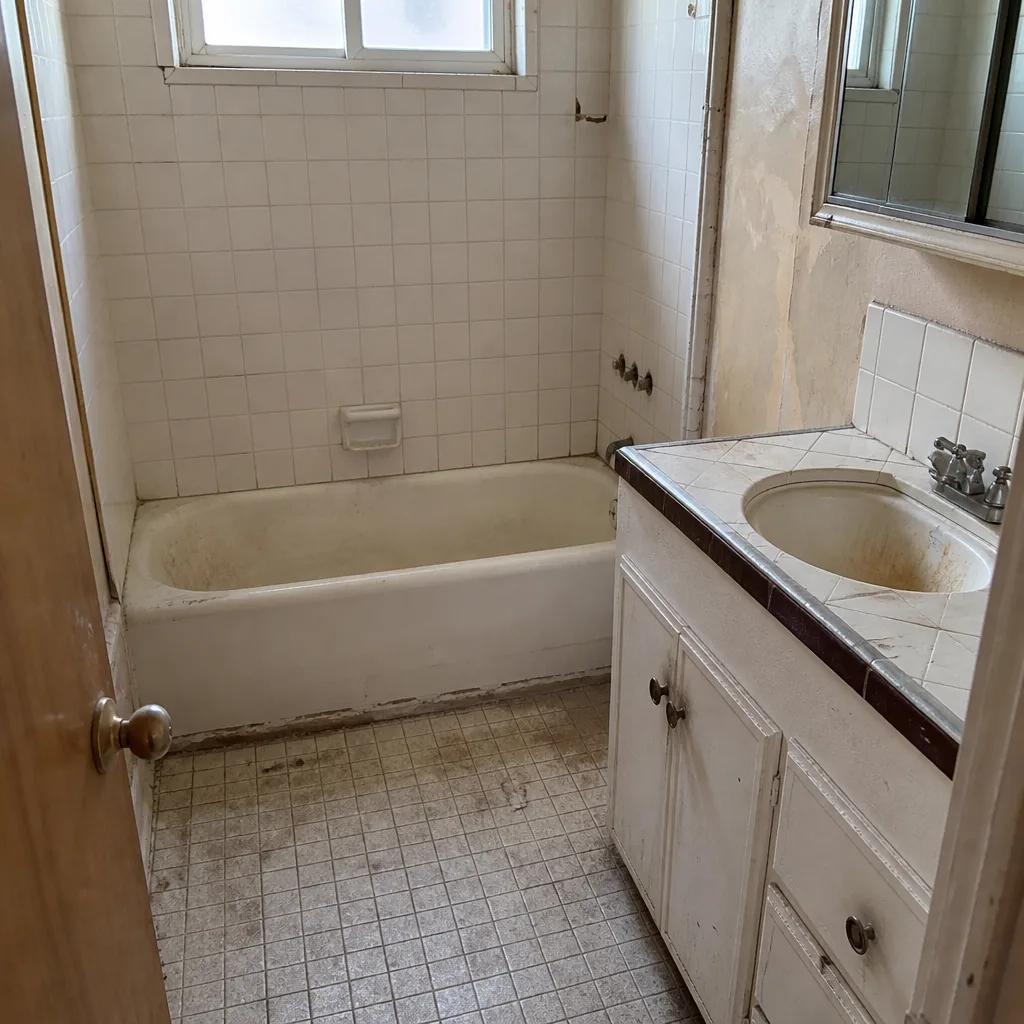 Before
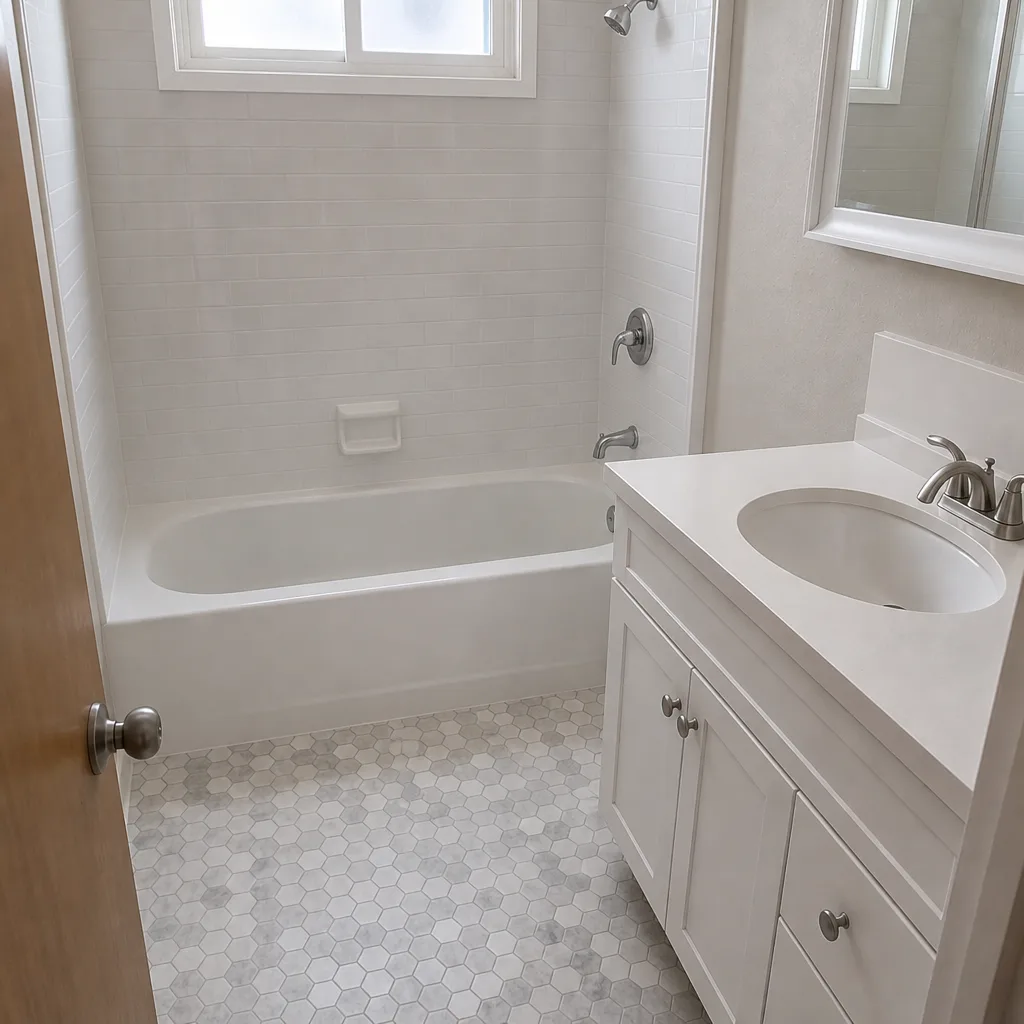 After
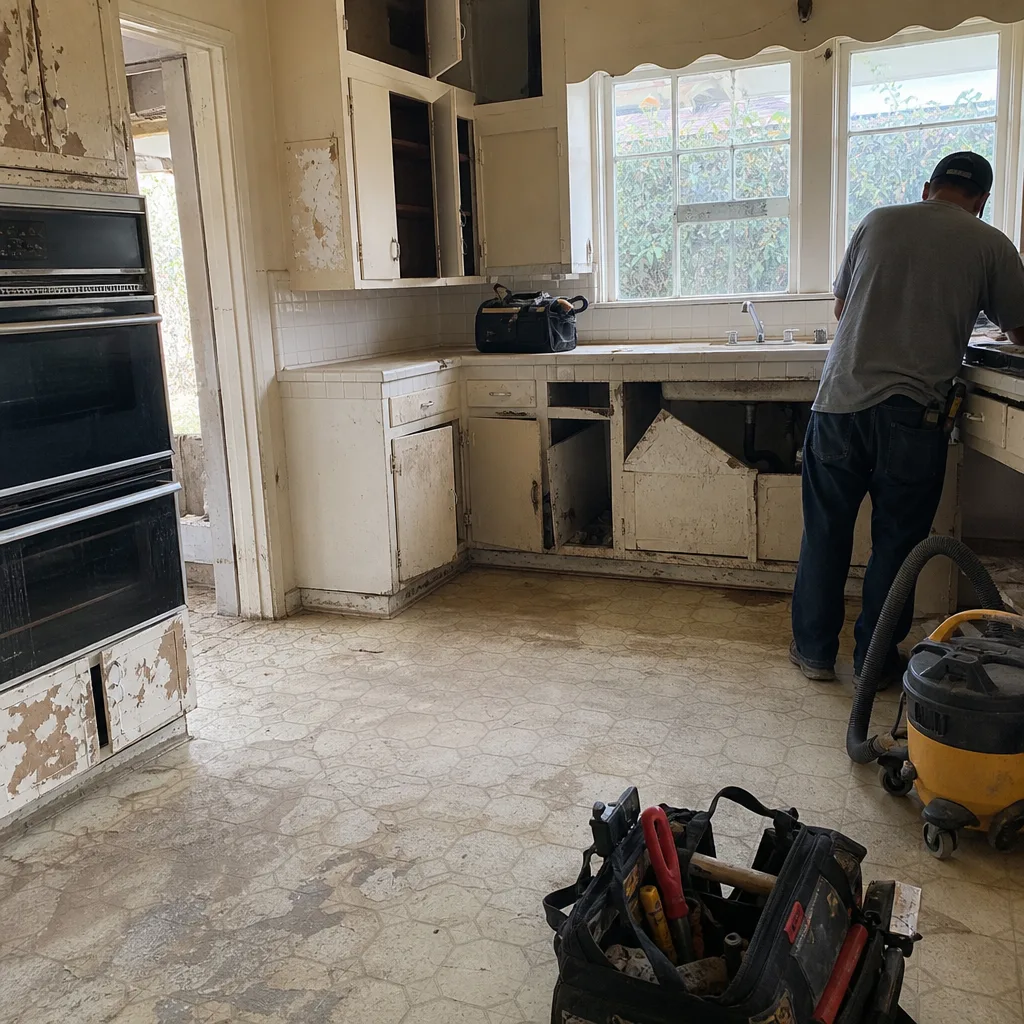 Before
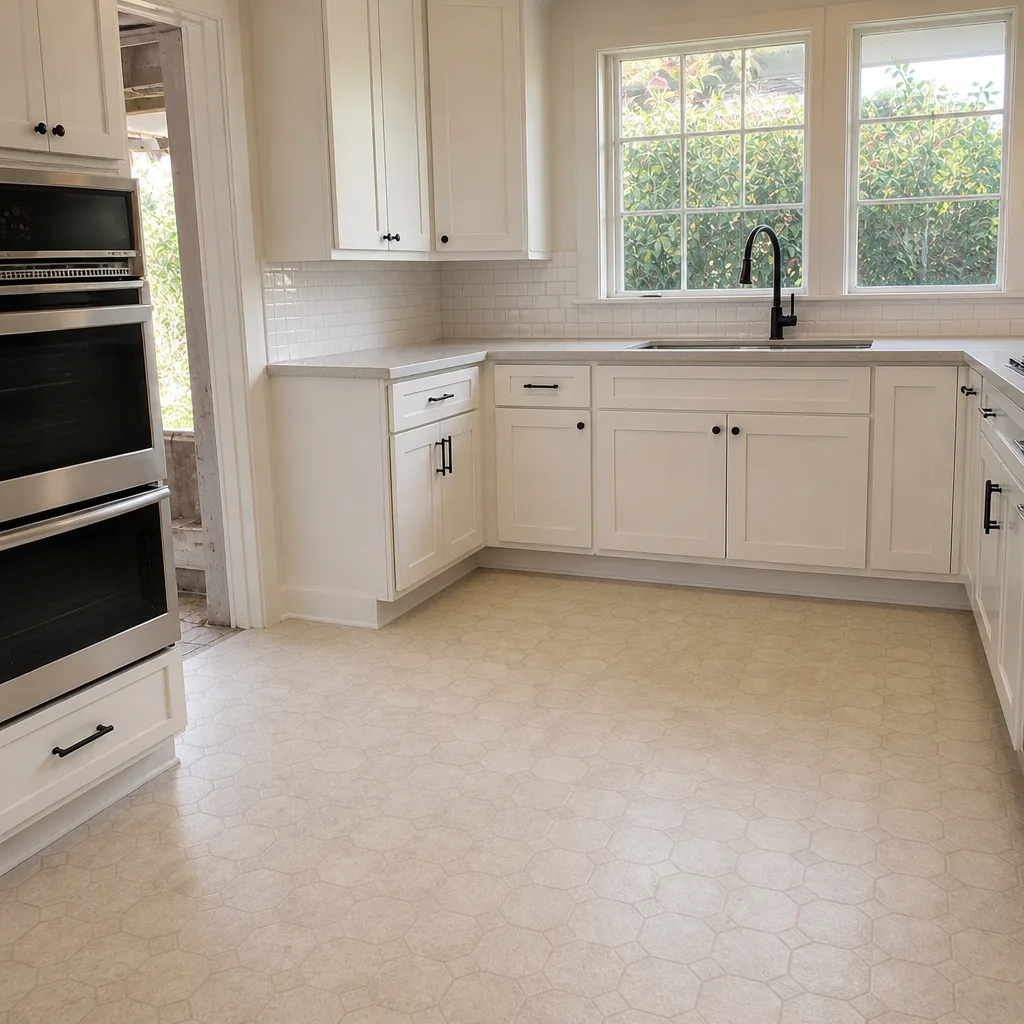 After
When to Call a Professional
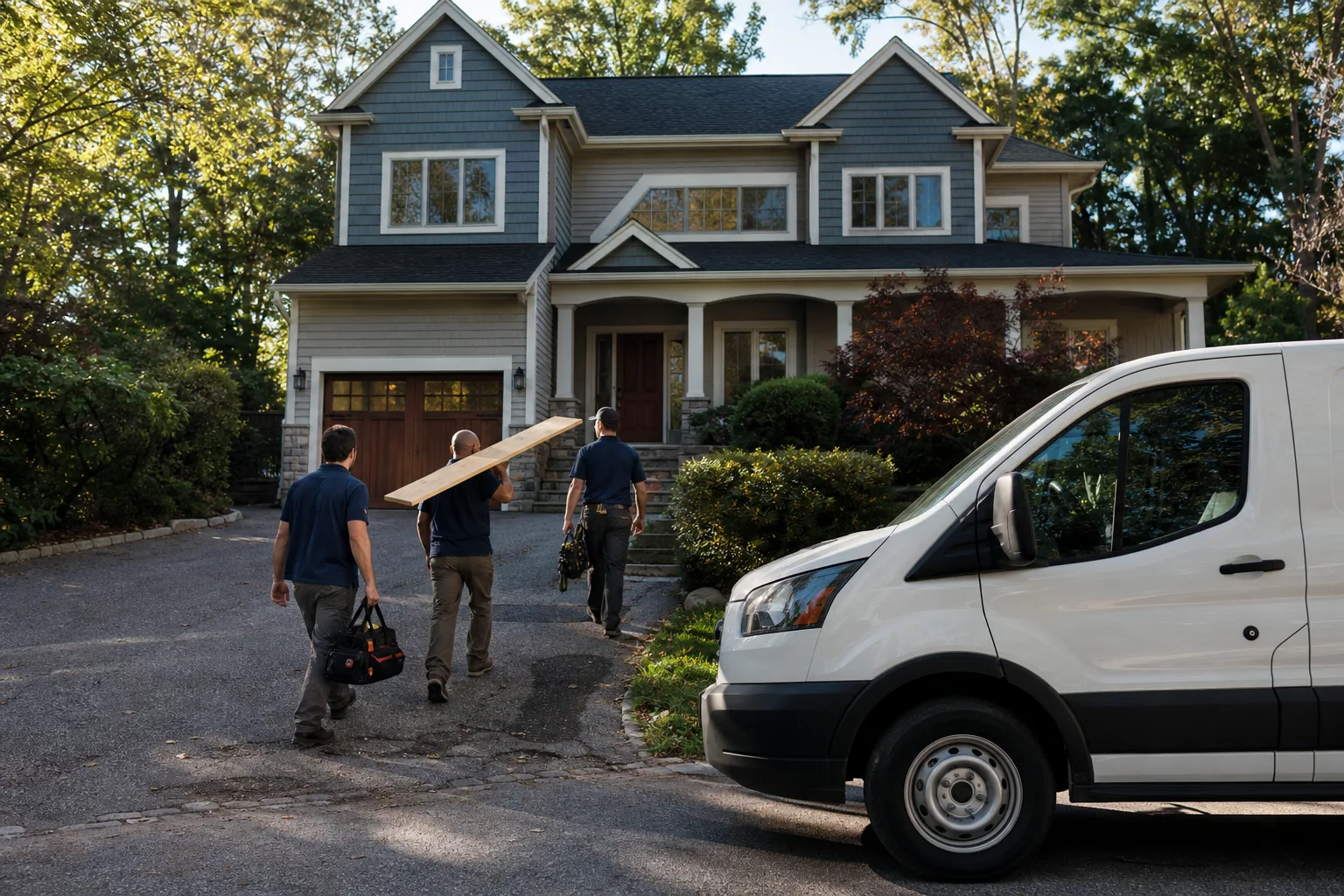
Some kitchen work is fine to do yourself. Cabinet hardware, painting, small improvements – reasonable weekend work. But the moment a project needs a permit, involves electrical or plumbing rough-in, or moves a wall, that’s when a background-checked, uniformed trades crew and a licensed general contractor become non-negotiable. The two reasons: permits, and the inspection sequence that goes with them. DIY permit work gets flagged at the first inspection, and the correction cost usually exceeds the money saved. If your kitchen project is older than 40 years, includes a panel upgrade or plumbing relocation, or your current contractor won’t produce a written schedule, call a professional. Bradford Remodeling Co Pasadena offers free estimates in Pasadena – call (888) 841-5410.
We work as a general contractor on kitchen projects across Pasadena, and the sequencing we describe here is what we build into every written schedule. If you’re in the earlier planning stage and want to see how a full general contracting scope fits together, our general contractor in Pasadena page walks through the overall structure. Homeowners who want to review the whole brand’s approach can start from the Bradford Remodeling Co Pasadena home page. If your kitchen shares plumbing or layout changes with a bathroom refresh, plan both projects together to sequence rough-in work once, and our bathroom remodeling in Pasadena page shows how that coordination works in practice.
Frequently Asked Questions
Most kitchen remodels in Pasadena take 6 to 12 weeks from signed contract to final walkthrough, with average projects landing around 8 weeks. Layout changes, panel upgrades, and Pasadena Building and Safety Division plan check can add one to three weeks. The two biggest variables are cabinet lead times and stone countertop fabrication – both are predictable, and both belong on the written schedule before work starts. Call (888) 841-5410 for a free estimate with a written schedule.
The two most common reasons are cabinet order timing and countertop fabrication, not labor speed. If cabinets were ordered after demo, the project loses four to eight weeks. If the template date was never scheduled, the countertop window stretches. If the delay is inspection-related, ask for the correction notice and scheduled re-inspection date – a real hold has documentation, a stall doesn’t. Call (888) 841-5410 to schedule a free estimate on a correctly sequenced project.
Yes, for most kitchen remodels. Pasadena requires a permit for cabinet replacement, plumbing or electrical changes, and any structural work. A cosmetic refresh with paint and appliance swaps often doesn’t need one; anything touching rough-in or walls almost always does. The permit card should be visibly posted on-site before demo starts – if your kitchen is gutted without a permit on the wall, that’s a problem. Call (888) 841-5410 for a free estimate; every quote includes the permit scope in writing.
Not on a properly written project. A written price before any work starts, plus written change orders for any scope change you approve, is how the price stays put. Surprises at the door usually come from contracts that don’t define scope, don’t define allowance items, or leave cabinet and stone selection open-ended. Our kitchen remodeling in Pasadena page walks through what a documented scope looks like. Call (888) 841-5410 for a free estimate with a written price.
Yes – most homeowners in Pasadena stay in their homes through the project, but plan for two to four weeks of real disruption (demo through drywall close). The rough phase creates dust and noise; the finish phase is quieter. Setup a temporary kitchen in another room, plan meals that don’t need a full stove, and make sure the crew tents the work zone with plastic and floor protection before demo. A disciplined crew leaves the site clean at the end of every day. Call (888) 841-5410 for a free estimate and a realistic disruption timeline for your project.
Every completed kitchen project is covered by a full-year written guarantee – if the work fails within that 365-day window, Bradford Remodeling Co Pasadena returns and corrects it at no charge. That covers installation failures, fit-and-finish issues, and workmanship defects. It doesn’t cover normal wear, appliance manufacturer failures, or damage from water intrusion after the project. The guarantee terms are in writing in your contract, not verbal. Call (888) 841-5410 for a free estimate and a written copy of the guarantee terms before you commit.
The Bottom Line
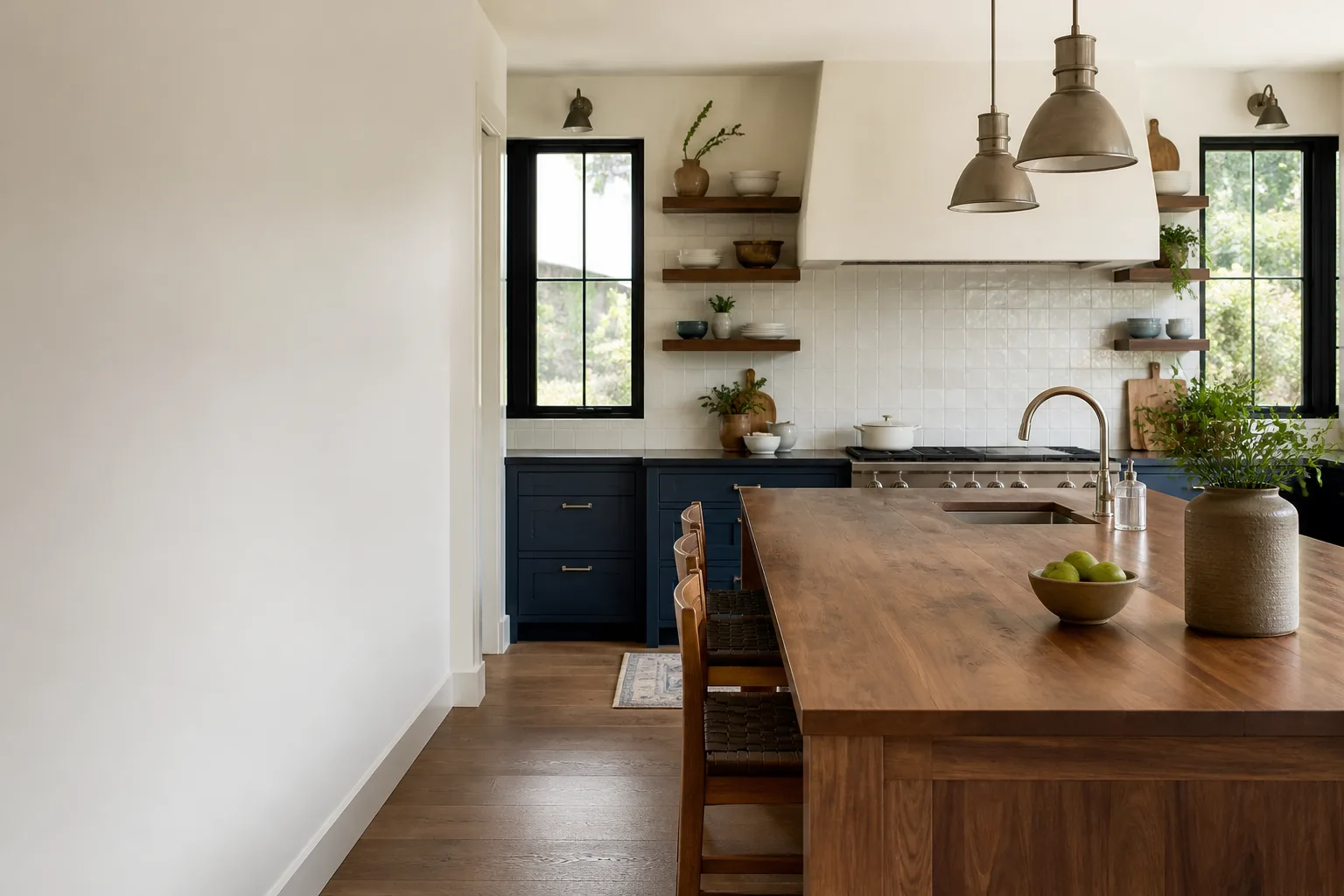
Kitchen remodel timelines are set by sequencing discipline, not by how fast a crew works. Permits get pulled early, cabinets get ordered on layout finalization, countertops template the same week cabinets install, and finish work fills the stone-fabrication gap. When those pieces move in order, a Pasadena kitchen lands in the 6 to 12-week range. When they don’t, the same project stretches to 16 weeks or more with no work actually being done in the gap. The two documents that protect you: a written project schedule with named milestones, and a written price with a written guarantee. If you’re weighing the next step, whether that’s a kitchen scope, a coordinated bathroom refresh, or a full general contracting project, the safe move is to price it before anything else happens. Call (888) 841-5410 to schedule your free estimate – written price, written schedule, and the 365-Day Done Right Promise in writing, before a single tool comes out.
Written by the team at Bradford Remodeling Co Pasadena.